Mapping Load In Qlik Sense
If you're searching for mapping load in qlik sense pictures information linked to the mapping load in qlik sense topic, you have pay a visit to the ideal site. Our website always provides you with hints for viewing the maximum quality video and picture content, please kindly search and locate more enlightening video content and graphics that match your interests.
Mapping Load In Qlik Sense
The mapping prefix is used to create a mapping table that can be used to, for example, replacing field values and field names during script execution. The mapping tables are put away in qlikview's memory just till the content is implemented and from that point forward, it is naturally removed. If you use this function in a macro expanded variable and refer to a mapping table that does not exist, the function.
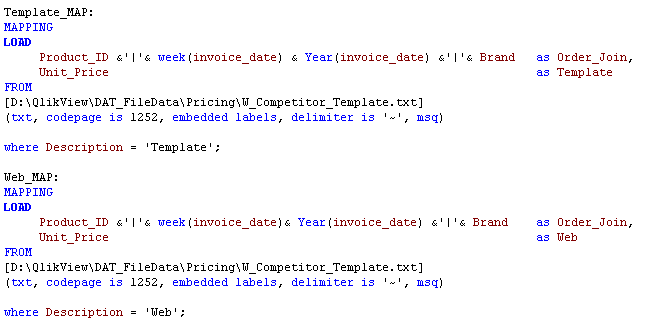
Create 4 mapping tables in qlikview and use applymap () as per your thinking. The mapping prefix is used to create a mapping table that can be used to, for example, replacing field values and field names during script execution. An alternative to join in situations where you need to look up a single value from another table is to use mapping instead.
Resident templist (.5 times) or.
Ad have a complete network diagram in minutes with auvik's automated network mapping. Go to the sheet editor by clicking on edit option on the sheet. Mapping to the load statement tells qlikview that a table is mapped with another. Do a single load and then load the 5 different mappings information from resident memory.
If you find this site beneficial , please support us by sharing this posts to your own social media accounts like Facebook, Instagram and so on or you can also bookmark this blog page with the title mapping load in qlik sense by using Ctrl + D for devices a laptop with a Windows operating system or Command + D for laptops with an Apple operating system. If you use a smartphone, you can also use the drawer menu of the browser you are using. Whether it's a Windows, Mac, iOS or Android operating system, you will still be able to save this website.